I would like to leave you my following thoughts, opinions and information links for your perusal, and always consult a physician:
- The food that you eat is your “medicine.” Refined sugar in very small amount is ok. Used sparingly/moderation. Otherwise, sugar is poison. Chances are if the food does not look like how nature made it, you should not eat it. Eat well, sleep well, get any kind of exercise that you can do into your senior years (yoga, Pilates, stretching, walking, biking, and swimming are great). You can run but it can be very hard on your joints and back. Avoid the crazy “flipping tractor tire” extreme workouts because of potential injury. Mix activities up to avoid monotony.
- Drinking water is great, but remember water follow sodium and magnesium. See Dr. Barbara O’Neil’s video on Celtic Sea Salt. Drink to thirst. Trust that your kidneys work. You will laugh as people drink excessive amounts of water and just to have to go urinate all the time. If you are working/exercising and sweating you are losing salt too. Don’t forget to consume salt with your water. Runners seem to like products like Nuun tablets to add to their water.
- Vitamin D is critical for immune system and bone density DrT normal range is 50-100 and ideal levels should be 70s-80s. Check vitamin D levels every 6-12 months until in preferred range if possible.
- Post-menopausal care: there are options that are non-hormonal, and they maybe ok for you, but don’t be afraid of hormone replacement therapy and especially vaginal estrogens. If your gynecologist will not entertain the idea, get a new doctor.
- Soaps remove oils from our skin. Be careful with over aggressively soaping the vulvar area causing irritation and removal of moisturizing oils at any age. Applying a thin layer of Aquaphor or Vaseline to the vulva after washing can return oils back to the skin and can sooth irritated dry skin. Also, the oil can act as a barrier protecting the vulva from irritants. And of course, if you are having a persistent problem, see you doctor.
- Bone loss can be prevented especially pre and post menopausally with weight bearing exercise, vitamin D levels above 50 (prefer 70s-80s) and dietary calcium. Assuming there is not a parathyroid tumor, if one has osteopenia or osteoporosis, PTH levels need to be in the bottom half of normal. Titrate your calcium intake to achieve this. Calcium supplements are fine but drink extra water with them to prevent kidney stones, gallstones, and constipation. And to be complete, don’t forget about magnesium in calcium absorption (avoid Mg Oxide supplements see YouTube link on magnesium). Medical treatments begin with bisphosphonates (i.e., Fosamax, Actonel, and Boniva), but you will receive a generic. None of the generic oral medications have good data to prove efficacy. I prefer name brand Reclast (zoledronic acid) once a year (for osteoporosis) or every other year (for osteopenia) IV infusion that has been proven to work ~40% better than name brand oral bisphosphonates, and it bypasses the stomach and absorption issues.
- Constipation – Bloating and belly pain. “If you don’t poop, you aren’t happy.” Fiber from fruits and vegetables are preferred, increase water, and exercise. A LITTLE caffeine in the morning can help. Fiber supplements/ high fiber cereals (like shredded wheat or bran buds) help most people, but occasionally makes some people worse. Stool softeners are an option. Before beginning laxatives, you should talk to your doctor. Look up Bristol stool chart. Optimal stool consistency is Type 4.
- DIABETES IS EVIL AND THERE IS NO SUCH THING AS PRE-DIABETES. As Obstetricians we ask our patients to keep completely normal fasting and 2 hours after meals glucose levels or we will increase the risk of vascular pregnancy complications. So why are we so cavalier, allowing elevated glucose levels? In my opinion, a little diabetes is like a little smoking. It’s not OK! Diet, exercise, and weight loss first before adding metformin ER. Most people with adult-onset diabetes especially those with PCOS have elevated insulin levels. High insulin levels cause problems.
- Insulin has many jobs: moving glucose out of blood and into cells, regulates protein synthesis, influences inflammation, and STOPS FAT CELLS RELEASING FAT, so when you consume carbohydrates/sugars you spike your insulin levels and close your “fat gates.” You won’t lose weight.
- Calories are from fat(9cal/gram), protein(4cal/gram), and carbs(4cal/gram). In general, in a normal person if you do not eat any carbohydrates/sugars for an extended period of time your insulin levels will fall and your “fat gates” will open and start dumping/burning fat. With someone with insulin resistance this may not happen because their insulin levels are high keeping glucose levels normal or close to normal. As a result, the “fat gates” stay closed. Metformin ER is the next step. Metformin allows your cells to listen to your own insulin better and allow lower insulin levels between eating, hopefully resulting in weight loss. This is why all variants of a no carb or low carb with minimal fat diets work (i.e., Atkins, South Beach, Keto, and intermittent fasting to name a few).
- GLP1 agonist and variants-Yes there is a place for them, but understand how they work. These drugs signal brain the stomach is full. This slows the entire stomach/gut system. As a result, your stomach doesn’t empty so food stays in the stomach (like 1-2 days ago food) and thus the stomach is full, and you eat less/ reduce your calorie intake. Patients are on these for quite a long time. Now, every calorie that you eat has MORE nutritional importance! So, you must avoid empty calories/junk (especially sugar/processed carbs and alcohol), and eat very well (nutrition consult). Otherwise, your body will have less protein, vitamins and minerals. Deficiencies can cause sickness and disease. If patients are having elective surgery, stop these medications 3 weeks before surgery. Since patients starting GLP-1 agonists are obese and insulin resistant, metformin ER should be continued or considered. BONUS-Since the gut is slowed you also get (TADA!) CONSTIPATION. So, keeping or increasing metformin ER while one a GLP-1 agonist can help combat the constipation. Also, metformin should be stopped 48 hours before surgery if possible due to potential irreversible acidosis exacerbated by anesthesia.
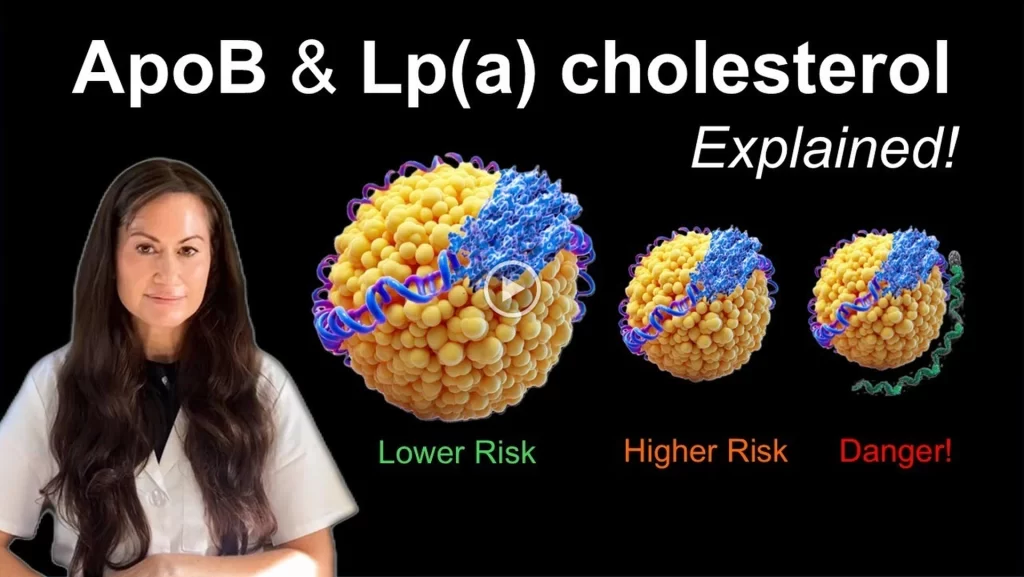
- Heart attacks and embolic strokes are driven by plaque in the arteries that rupture and then clot completely blocks the artery (heart attack) or clot flicks off and lodges in a smaller downstream artery in the brain (stroke). Major risk factors are diabetes, uncontrolled hypertension, tobacco smoking, elevated cholesterol is not the problem, but elevated Lipoprotein (B) seems to be a problem (there is a single Lipoprotein B molecule on each LDL, IDL, VLDL) and finally, family history (genetic elevated Lipoprotein (a) which 20% of the population carries, and they don’t even know). I suggest getting a coronary calcium score (CT of the Heart for coronary calcium) or even better a CT of the heart with IV dye (CCTA) to establish your real risk, and everyone should have a Lipoprotein(a) done once in their life (must be greater than 5 years old). I know this is a little overwhelming, so I recommend reading “Outlive” by Peter Attia. I don’t agree with his preventative cancer medication, and in a YouTube link by Nick Norwitz, there is some question with ApoB (Lipoprotein B) and causality in heart disease. The YouTube videos below will begin to open your eyes that providers are so far behind in the prevention of vascular disease the biggest killer of Americans (heart attack and embolic stroke), and we are only reactive not proactive with our patients.
- YouTube Videos: